 Julian Kramer
One dataset runs the whole business.
Carddex tracks what trading cards cost across the big marketplaces, works out what each listing really is, and turns that into a picture of the market. Then the same data runs Kardz.eu, the business behind it: what to buy, what it's worth, and what to sell.

Measured on the production database, November 2026 — rounded down, not up.
From a price tag to a parcel.
Five steps, one dataset. Every step writes to the same place the next one reads from, so the shop and the portfolio see exactly what the app shows.
Track every ask.
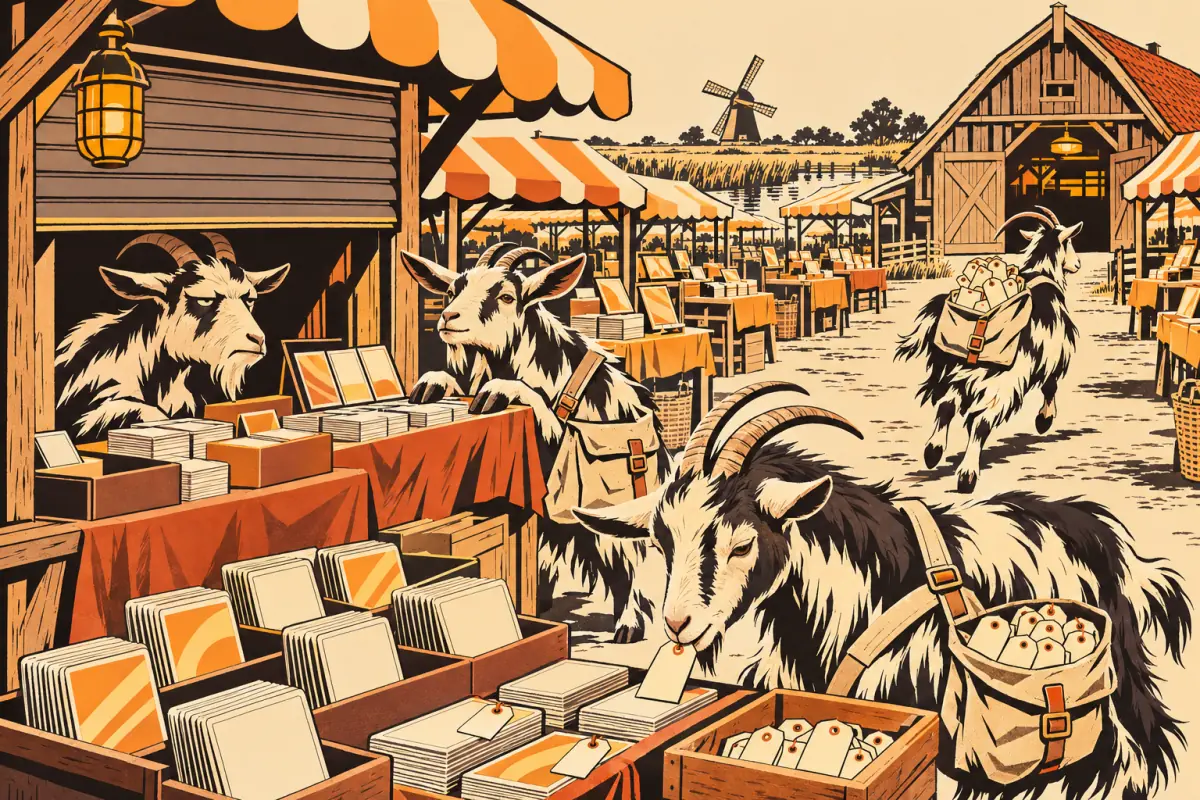
Every day Carddex tracks the live asks on Cardmarket in Europe and TCGplayer in the US, with eBay alongside: about two million prices a day, across 56 games. A fleet of workers on my own hardware does the collecting, with Azure and GCP behind it, and an orchestrator at home schedules, retries and spreads the runs.

Know what's really for sale.
A price means little until you know what it's for. A local LLM reads each listing and the seller's comments and classifies them — language, condition, what's actually in the box — on my own GPUs, with no per-token bill. It's measured against hand-checked gold sets, and smaller student models are being distilled from it.

Turn prices into a market.
Prices become signals: market value per game and language, supply coming in and going out, daily floor-price moves, and a machine-learning model that predicts where a product's floor price goes over the next seven days. Every model is tracked in MLflow and has to clear a licensing bar before it counts.

Buy with the board, not the hype.
Kardz.eu, the business behind Carddex, buys sealed product and graded cards. The same data appraises the collection: every box is marked against live prices across markets, and the portfolio is valued from the same numbers the app shows. A mark stays a mark until something actually sells.

Close the loop.
The shop sells on Bol and Amazon. Orders are picked, packed and posted by hand, while stock, orders, the VAT margin scheme and invoices run through my own inventory system — so every sale lands back in the data the next decision starts from.
What people actually use.
- carddex.eu — the public web app: prices, market value and trends per game, set and product.
- iOS and Android — the same market in a native app.
- Bots and alerts — Discord bots, plus restock, price-drop and arbitrage tools built on the same feeds.
- Kardz.eu — the shop and the collection, run on the numbers above.
Carddex is the platform I bring to every client conversation: built and run end to end, everything as code, keyless across clouds, monitored, and delivered AI-augmented. If it works here, at this scale and on this budget, it's ready for yours.